
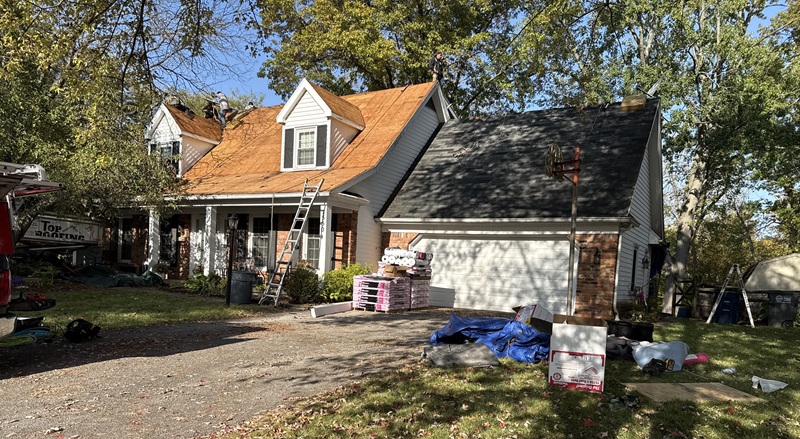
When does roof decking need to be replaced? Usually when the wood beneath the shingles is rotted, delaminated, broken, structurally unsound, unable to hold roofing fasteners, or too uneven to support the new roofing system properly. Sound decking normally stays in place. Damaged sections are identified and addressed before new underlayment and shingles cover the roof.
The challenge is that much of the deck cannot be fully evaluated from the ground. An attic inspection may reveal stains, sagging, daylight, or soft areas, but the clearest view often comes after the old roofing is removed. That is why a roof replacement estimate should explain how concealed wood damage will be documented, priced, and approved if the crew finds it during tear-off.
This guide explains roof decking replacement in Toledo, including the difference between plywood and OSB, warning signs homeowners may notice, what roofers check after tear-off, and how decking repairs can affect cost and timing.
Roof decking should be replaced when it cannot provide a dry, smooth, sound, and properly supported surface for the roofing system. Common reasons include decay, severe moisture damage, plywood delamination, broken or missing sections, loss of fastener-holding ability, significant sagging, and damage around long-term leaks or penetrations.
Most important: A full roof replacement does not automatically require a full redeck. The contractor should preserve sound decking and define any necessary repairs based on the exposed condition of the roof.
Top Roofing’s residential replacement process states that the crew removes the old roofing and inspects the decking before installing the new system. When hidden damage is found, the proposed repair should be explained before it is covered.
Roof decking, also called roof sheathing, is the structural surface fastened over the roof framing. Underlayment, leak protection, flashing details, and shingles are installed above it. The deck helps create a continuous base that supports the roofing system and transfers loads to the rafters or trusses.
Common residential decking materials include:
The American Wood Council’s wood-panel guide explains that plywood and OSB are both commonly used for residential roof sheathing. The correct panel, thickness, span rating, fastening, spacing, and installation method depend on the roof design, applicable requirements, and roofing manufacturer’s instructions.
No. A roof replacement normally removes the shingles and other roofing layers down to the existing deck so the surface can be examined. Decking that is dry, sound, properly supported, smooth enough for the new system, and capable of holding fasteners can often remain.
Replacing every panel without a condition-based reason adds unnecessary material and labor. Covering damaged wood to avoid the repair creates a different problem: the new roof would be installed over a weak or unreliable base. The practical approach is to inspect the exposed deck and replace only the areas that do not provide an acceptable substrate, unless the condition is widespread enough to justify a larger redeck.
For the full sequence from inspection through cleanup, see Top Roofing’s roof replacement timeline for Toledo homeowners.
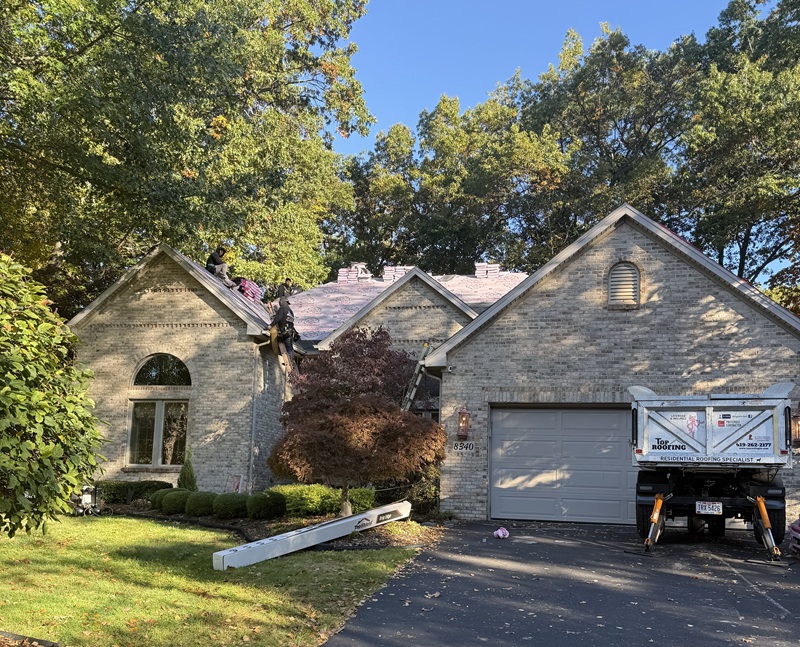
One symptom does not always prove that the deck needs replacement. Roofers consider the pattern, severity, cause, and condition of the surrounding material.
Wood that feels soft, compresses, or no longer provides solid support may have lost integrity because of decay or prolonged moisture exposure. Homeowners should not walk the roof to test it. A soft area is a safety concern that belongs in a professional inspection.
A visible dip or sag can involve decking, framing, or both. It may also result from movement, overloading, or another structural issue. The cause must be identified rather than assuming that replacing one sheet of plywood will correct the entire condition.
Persistent moisture can allow wood decay to develop. Dark staining alone is not the same as rot, but wood that is crumbling, soft, severely deteriorated, or unable to hold a fastener may need to be removed. The leak, ventilation problem, or moisture source must also be corrected.
Plywood can separate into layers when the panel is severely damaged. OSB can show swelling, flaking, or roughness after extended moisture exposure. Not every cosmetic change means a panel has lost structural capacity, which is why condition and serviceability should be evaluated rather than judged by color alone. The APA guidance on wood panels exposed to excessive moisture explains that exposure severity, duration, drying, decay, and delamination all matter.
Cracked panels, open holes, damaged edges, or sections that do not land properly on framing may not provide a reliable base. Older board decks can also have gaps or deterioration that require a project-specific repair plan before shingles are installed.
Shingles and roofing components rely on proper fastening into an approved deck. If deteriorated wood cannot hold fasteners as intended, new shingles may not be securely attached even if the surface looks acceptable from above.
Water entering around a chimney, valley, skylight, pipe boot, or roof edge can affect a limited area of decking. Fire, a fallen limb, or another impact can create a different pattern. The repair scope should follow the actual damage rather than assuming that every event requires a full redeck.
Shingles and underlayment cover the top of the deck. Attic insulation, finished ceilings, limited access, and roof geometry can block the underside. An inspection before replacement can identify warning signs, but it cannot expose every square foot.
Before tear-off, a contractor may look for:
After the old materials are removed, the crew can inspect the top surface, panel edges, joints, fastening, and areas around penetrations. That direct view is why concealed decking is commonly handled as a documented project condition rather than guessed at before installation.
If a stain or leak is the first warning sign, use Top Roofing’s Toledo roof leak guide to protect the home and gather useful information before the inspection.
Localized damage can often be addressed by replacing affected sections and supporting the new material correctly. Widespread deterioration, extensive spacing or support problems, or a deck that is broadly unsuitable for the selected roofing system may require a larger scope.
| Deck condition | Possible scope | What should be documented |
|---|---|---|
| One damaged area near a leak | Localized section replacement | Cause, affected area, support, material, and completed repair |
| Several separated damaged areas | Multiple panel or board repairs | Locations, total quantity, pricing method, and moisture source |
| Widespread deterioration or unsuitable deck | Broader redeck may be recommended | Why the existing surface is unacceptable and the proposed replacement specification |
| Sound, dry, supported decking | Retain the existing deck | Any minor preparation needed before underlayment |
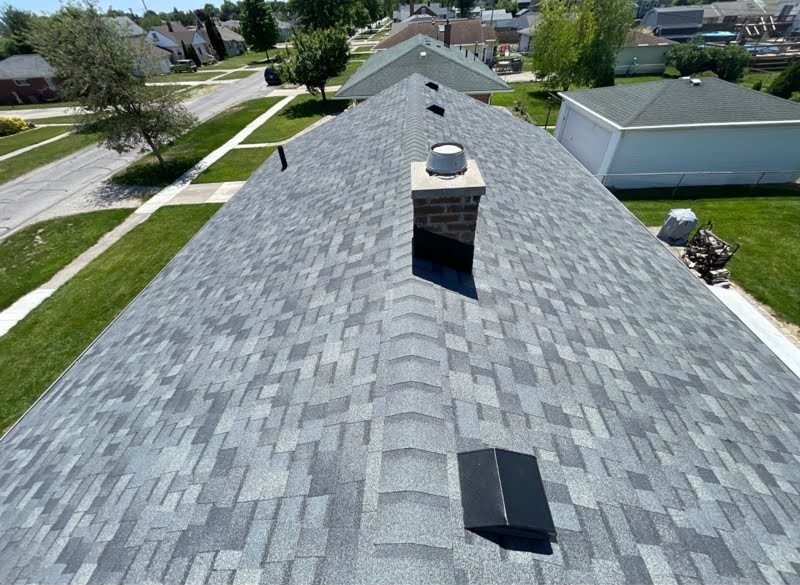
Plywood and OSB are both wood structural panels used for roof sheathing. Neither material should be selected by name alone. The roof design, panel rating, span, thickness, edge support, fastening, moisture conditions, manufacturer instructions, and applicable requirements all matter.
For homeowners comparing an estimate, the useful questions are:
Owens Corning’s roofing document library includes current roof-deck and shingle installation guidance. Its instructions emphasize that the roof deck must be properly prepared and suitable for the roofing system. Product instructions, the approved project scope, and applicable local requirements should guide the installation.
New roofing should not conceal decking that is damaged, rotted, structurally unsound, or otherwise unable to support the system properly. Owens Corning underlayment instructions call for a dry, clean, smooth, and structurally sound deck, with damaged or rotted material replaced before installation.
Installing attractive shingles over an unreliable base does not solve the underlying problem. Weak decking can affect fastening, surface alignment, water management, and the long-term performance of the roof. It can also make future repairs more difficult because the damage is hidden beneath a newly completed system.
That does not mean every stain or rough panel requires removal. A qualified roofer should evaluate whether the material remains sound and serviceable, then explain why a repair is or is not necessary.
Deck damage is often a symptom rather than the original cause. Water may enter through worn roofing, failed flashing, an opening around a penetration, ice-related backup, or storm damage. Moisture can also collect when warm, humid indoor air reaches a cold roof deck and the attic lacks a balanced path for intake and exhaust.
Replacing damaged wood without correcting the source leaves the new decking exposed to the same condition. A complete plan may need to address:
Learn how attic conditions affect the roof in Top Roofing’s guide to a hot attic in Toledo. The right correction depends on the home, so adding random vents is not a substitute for evaluating the full airflow path.
There is no accurate universal price for roof decking replacement because the final cost depends on what is uncovered and how the repair must be completed. Important factors include:
A useful estimate explains the pricing method before tear-off. It may state an approved unit price, an allowance, or another process for concealed wood replacement. The homeowner should know how the crew will document the condition and obtain approval if the final quantity changes.
For other factors that influence the project price, read how much a new roof costs in Toledo.
Replacing a few localized sections may add limited time. Extensive redecking, framing concerns, hard-to-access areas, material availability, or a moisture problem that requires additional work can extend the project further.
The crew also needs safe weather while the deck is exposed. If conditions become unsafe or the roof cannot be protected properly, work may pause. A contractor should update the homeowner when a concealed condition changes the agreed scope or expected completion time.
Before signing, ask the contractor to make the concealed-deck process understandable. The written estimate should address:
Coordinating roofing for a Monclova home or addition? Our Monclova roofing guide connects roofline details, concealed-deck questions and local project planning.
Warranty terms should be clear too. Review Top Roofing’s guide to manufacturer and workmanship roofing warranties so you can separate product coverage from installation obligations and keep the right project records.
If the roof is older and you are deciding whether more repair work makes sense, compare the warning signs in the roof repair versus replacement guide and the planning ranges in how long asphalt shingle roofs last in Ohio.
Roof decking does not have to be replaced on the same schedule as shingles. Sound plywood, OSB, or board decking may remain through more than one roofing cycle when it stays dry, supported, and serviceable. Leaks, condensation, decay, physical damage, and installation conditions can shorten its useful life.
An attic inspection can reveal stains, sagging, soft areas, moisture, rusted fasteners, or daylight, but insulation and limited access can hide parts of the deck. The top surface is usually evaluated most clearly after the old roofing is removed.
Not automatically. Sound existing decking can often remain. Necessary replacement depends on the condition found during inspection and tear-off. The estimate should explain how added wood is documented, priced, and approved.
Yes, localized replacement may be practical when the damage is limited and the new section can be supported and integrated correctly. Widespread deterioration or broader deck problems can require a larger scope.
Both are commonly used structural panels. A blanket answer ignores panel rating, thickness, span, support, fastening, moisture exposure, manufacturer instructions, and the roof design. The proposal should identify the material and why it is appropriate for the project.
Coverage depends on the cause of damage and the policy. Sudden covered events may be treated differently from age, wear, long-term leakage, maintenance, or construction defects. A roofer can document visible conditions and provide an estimate, but the insurance carrier decides coverage.
It can affect whether the roof was installed over an acceptable substrate and whether the system meets applicable written requirements. Review the selected manufacturer’s instructions and the actual warranty terms for the project rather than relying on a general statement.
You do not have to guess how much decking may be damaged before an inspection. Top Roofing can evaluate the visible roof and attic conditions, explain the proposed replacement scope, and inspect the exposed decking during tear-off.
If damaged wood is found, the recommendation should identify the affected area, necessary repair, pricing method, and any effect on the schedule. Learn more about Top Roofing’s residential roof replacement service or request an estimate for your Toledo-area home.
Planning a roof replacement in Toledo?
Ask Top Roofing how the estimate handles tear-off, decking inspection, necessary wood replacement, and project documentation.
Call (419) 262-2177 Request A Roof Estimate
This guide uses Top Roofing’s published replacement process and current technical resources from Owens Corning, APA, and the American Wood Council. Product instructions and applicable requirements can change. The written proposal, selected roofing-system instructions, and the condition of the exposed roof deck control the actual project scope.