
Quick takeaway: For most Toledo homes, a hot attic is not fixed by adding random vents. The best hot attic solution is balanced attic ventilation: clear soffit intake, properly sized ridge or roof exhaust, baffles to keep airflow open, and attic air sealing where needed. Ask Top Roofing to check ventilation during your roof repair or roof replacement inspection.
Summer in Northwest Ohio can make your attic feel like an oven. Even when your air conditioner is running, heat trapped above the ceiling can make upstairs bedrooms uncomfortable, increase the strain on your cooling system, and put extra stress on your roofing system.
The fix is not always “add a fan” or “cut in more vents.” The real goal is balanced attic ventilation: fresh air coming in low, hot air escaping high, and a clear path between the two.
If you are planning a roof repair, dealing with storm damage, or considering a roof replacement, summer is a smart time to ask about ventilation. A few upgrades made at the right time can help your roof perform better in every season.
A hot attic is not automatically a failed attic. On sunny summer days, attic temperatures can climb well above outdoor temperatures, especially under dark asphalt shingles. Building Science Corporation notes that vented, unconditioned attics commonly reach 120–130°F on summer days, and the underside of asphalt-shingle roof decks can get even hotter.
What matters is whether the attic heat is excessive, trapped, or causing symptoms inside the home.
A thermometer reading is useful, but it should not be the only thing you rely on. A professional ventilation check looks at the full system: intake, exhaust, baffles, attic air sealing, insulation, roof decking, and the roof design itself.
Most homeowners think about attic ventilation during winter because of ice dams. That matters in Toledo, but summer ventilation is just as important.
In summer, ventilation helps with three big things: roof durability, moisture control, and home comfort.
First, hot trapped attic air can increase stress on the underside of the roof deck and the shingles above it. Balanced ventilation helps reduce excessive attic heat and moisture, which can limit premature deterioration of the roof system. GAF describes balanced attic ventilation as equal air entering and exiting the attic, helping reduce damaging heat and moisture while supporting roof system performance.
Second, moisture is not only a winter problem. Humid outdoor air, bathroom fans, small roof leaks, and air leaks from the living space can all add moisture to the attic. When moisture cannot dry out, it can contribute to damp insulation, staining, musty odors, and roof deck issues. Building America recommends good roof vents, insulation baffles, and dams to encourage under-roof ventilation and help drying when condensation occurs.
Third, ventilation can help reduce heat buildup above your living space. If your attic is poorly ventilated, poorly insulated, or full of air leaks, heat can radiate downward, making your AC work harder. This is especially important if ductwork or an air handler runs through the attic.
The key is balance. Ventilation helps, but it works best with proper insulation and air sealing. That is why the right inspection looks at the attic and roof together, not as separate problems.
For the winter side of the same issue, see our guide: Attic Ventilation & Insulation: The Secret to Preventing Ice Dams.
| Problem Sign | Likely Issue | What Top Roofing Checks |
|---|---|---|
| Upstairs stays hot after sunset | Trapped attic heat | Intake, exhaust, baffles, and attic airflow path |
| Ridge vent present but attic still hot | Not enough soffit intake | Blocked soffits, missing baffles, painted or clogged intake |
| AC runs constantly | Heat transfer from attic | Ventilation, insulation, attic hatch, and air leaks |
| Shingles aging unevenly | Roof deck heat and ventilation imbalance | Ridge vent, roof deck condition, exhaust placement |
| Musty attic smell | Moisture not escaping | Bath fan routing, roof leaks, exhaust vents, roof decking |
Note: These signs do not always point to one single issue. A full roof and attic inspection helps confirm whether the problem is ventilation, insulation, air sealing, roof damage, or a combination of factors.
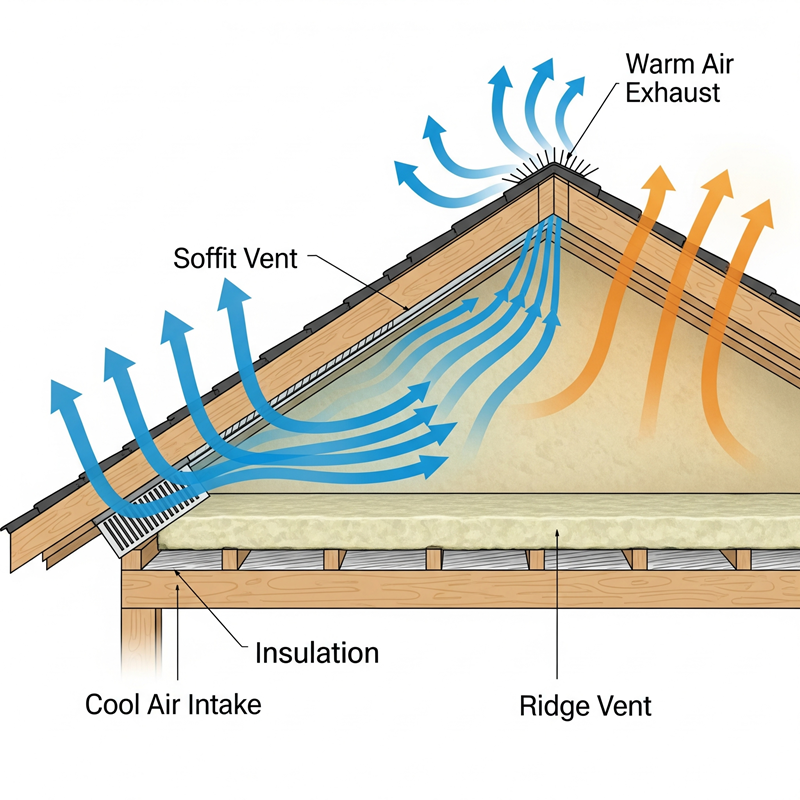
Think of attic ventilation like breathing.
Your attic needs to breathe in through intake vents and breathe out through exhaust vents.
Intake vents are usually located at the lowest part of the roof system, often in the soffits or eaves. They allow outside air to enter the attic.
Exhaust vents are located near the highest part of the roof, often along the ridge. They allow hot, moist air to leave the attic.
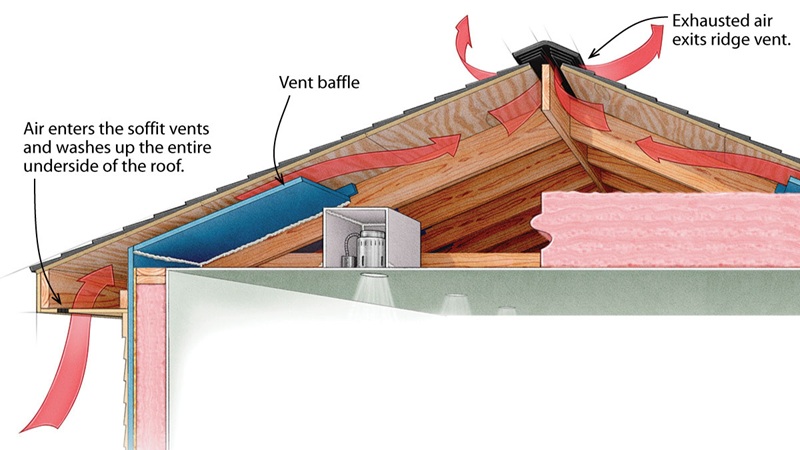
For many Toledo-area homes, the best setup is a combination of soffit intake and ridge exhaust. Cool air enters low at the eaves, travels through the attic or along the underside of the roof deck, and exits high at the ridge.
That airflow path matters. If insulation blocks the soffits, the ridge vent cannot pull in enough replacement air. If the ridge slot is cut incorrectly, the exhaust may not work as designed. If different exhaust systems are mixed together, one vent can sometimes pull air from another vent instead of from the soffits.
Balanced ventilation is not about adding random vents. It is about matching the intake and exhaust volumes in the attic space. GAF notes that the commonly referenced 1:300 ventilation rule calls for at least 1 square foot of ventilation per 300 square feet of attic space, split evenly between intake and exhaust, and warns that local codes and roof design matter.
Many ventilation problems are not obvious from the ground. A roof can have vents and still perform poorly if the system is blocked, unbalanced, or mismatched.
Here are some of the most common issues we see in older homes and roof systems around Toledo, Sylvania, Maumee, Perrysburg, Ottawa Hills, and surrounding Northwest Ohio areas.
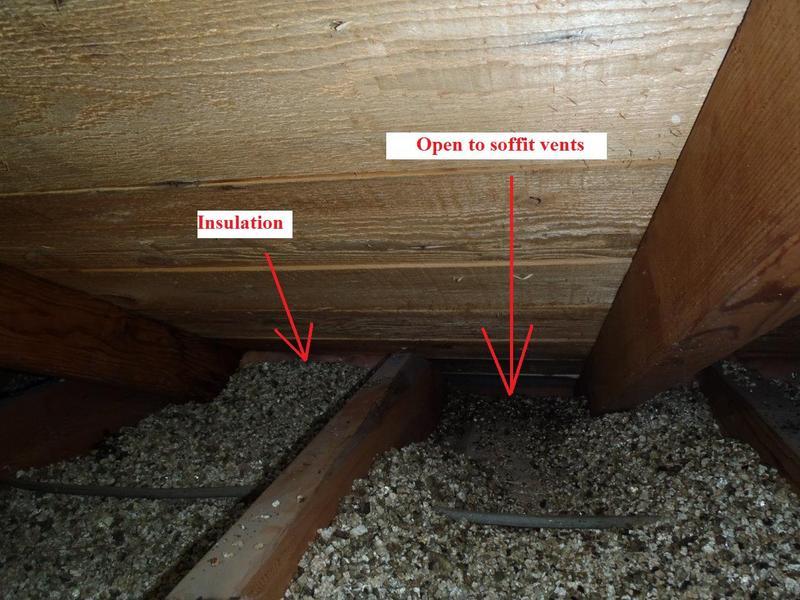
Blocked soffit vents
This is one of the biggest problems. A home may have soffit vents on the outside, but the insulation may be packed tightly against the eaves inside the attic. When that happens, air cannot enter properly. Baffles, also called rafter vents or ventilation chutes, help keep that air channel open.
Too much exhaust and not enough intake
Homeowners often notice a hot attic and assume the answer is more exhaust. But exhaust without intake can pull air from the house through ceiling gaps, light fixtures, attic hatches, and other leaks. That can make the AC work harder and increase energy waste.
Mixing exhaust systems
Ridge vents, gable vents, box vents, turbines, and power vents can all have a place in the right design. But mixing multiple exhaust types in the same attic space can short-circuit airflow. GAF lists mixing exhaust products as a common installation mistake because vents can work against each other, rather than ventilating the entire attic.
Power attic fans are added before the attic is sealed
A powerful attic fan can seem like the obvious solution for a hot attic, but it can backfire if the soffits are blocked or the ceiling plane is leaky. ENERGY STAR warns that attic fans can pull conditioned air from the home into the attic when soffit vents are blocked, and the attic is not well sealed, which can make the air conditioner work harder and increase summer utility bills.
Bathroom fans venting into the attic
Bathroom fans should move moisture outdoors, not into the attic. Venting humid air into the attic can contribute to damp insulation, staining, and mold-like growth.
Painted, clogged, or undersized vents
Soffit vents and screens can clog with dust, paint, debris, spider webs, or old repairs. Even if vents are technically present, they may not provide enough net free area for the attic.
Roof replacement without a ventilation upgrade
This is a missed opportunity. If your roof is already being replaced, that is the best time to evaluate the ridge, roof deck, old vents, intake, and airflow path.
The best time to improve attic ventilation is often during a roof replacement.
Why? Because the roofing system is already opened up. That makes it easier to inspect the roof deck, correct old venting mistakes, install or improve ridge ventilation, remove mismatched roof vents, and properly address roof penetrations.
The ROI is simple: it is usually easier and cleaner to correct ventilation while the roof is already being replaced than to cut into a newer roof later. Better ventilation can also help protect the new shingles, reduce attic heat buildup, and support better year-round attic performance.
That does not mean every ventilation fix requires a full roof replacement. If you are scheduling a roof repair for a leak, missing shingles, damaged flashing, storm damage, or vent issue, ask for a quick ventilation check at the same time. Sometimes the repair visit reveals a bigger airflow problem that should be addressed before it causes more damage.
Yes, ridge vents can work well for many Toledo homes, but only when paired with sufficient intake ventilation. A ridge vent is an exhaust vent. It cannot perform properly if soffit vents are blocked, missing, or undersized.
Yes. Intake is often the most important part of the system. Without intake, exhaust vents may pull air from the wrong places or fail to move enough air through the attic. That is why checking soffits and baffles is one of the first steps in a good attic ventilation inspection.
Not until the full attic system is checked. A power fan may help in certain designs, but it can also pull cooled air from the living space if the attic is not air-sealed or if intake vents are blocked. In many homes, fixing blocked intake and improving passive ventilation should come first.
Sometimes existing homes have both, but mixing exhaust types can create airflow problems. In many cases, a clean soffit-to-ridge system performs better than a mix of ridge vents, gable vents, turbines, and box vents. The right answer depends on the attic layout, roof shape, and existing ventilation.
No. Box vents can work when properly placed and properly balanced with intake. They are often used when a roof does not have enough ridge length for a continuous ridge vent. The mistake is adding them randomly or mixing them with other exhaust vents without calculating the system.
It can help reduce heat buildup and cooling strain, especially when the attic is extremely hot or when ductwork is located in the attic. But ventilation is not a magic fix by itself. The best results usually come from balancing ventilation with attic air sealing and insulation.
No. More random ventilation is not the goal. Balanced ventilation is the goal. Too much exhaust, too little intake, or a mixture of exhaust products can reduce performance.
Yes. Summer ventilation helps reduce attic heat buildup, while winter ventilation helps control moisture and keep the roof deck closer to outdoor temperatures. That is why attic ventilation is a year-round roof performance issue, not just an ice dam topic.
A hot attic is not just an attic problem. It can affect your shingles, roof deck, comfort, moisture control, and cooling load.
If you are scheduling a roof inspection, roof repair, or roof replacement, ask Top Roofing to check your attic ventilation at the same time. We can look for blocked soffits, missing baffles, unbalanced intake and exhaust, damaged vents, roof deck warning signs, and ventilation mistakes that may be shortening the life of your roof.
Ready to get your roof and attic checked? Contact Top Roofing or call (419) 262-2177 and ask us to check ventilation during your inspection.
Use these trusted resources to learn more about balanced attic ventilation, soffit and ridge airflow, attic fan cautions, moisture control, and summer attic heat before making ventilation updates.