
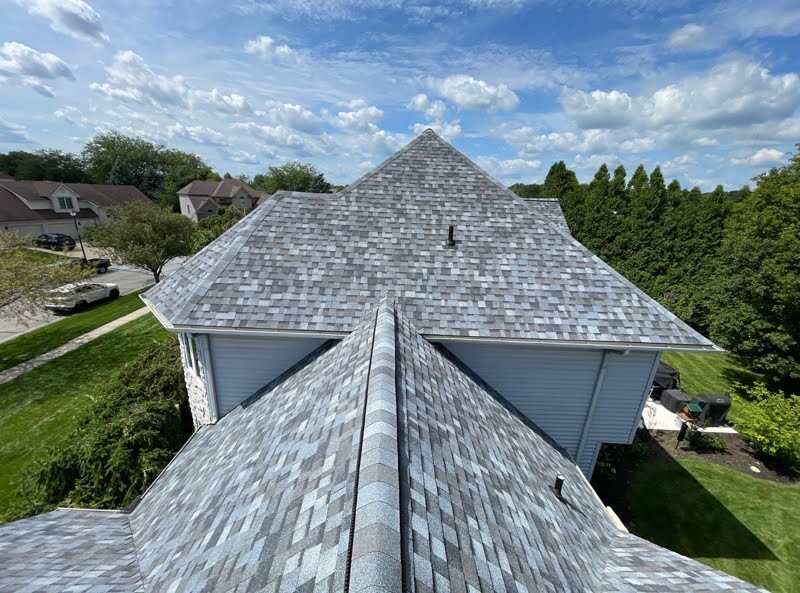
How long does an asphalt shingle roof last? A practical planning range is about 15 to 30 years, but the roof over your home may fall outside that range. Installation quality, the shingle and roof system selected, attic ventilation, roof design, sun, storms, and maintenance all affect how quickly shingles age.
That variation matters in Northwest Ohio. A roof can face summer heat and ultraviolet exposure, winter freeze-thaw cycles, wind, hail, snow, and trapped attic moisture over its service life. The installation date is useful, but age alone cannot tell you whether a roof needs a small repair, has several sound years left, or is ready for replacement.
If you are asking, “How long does a roof last in Ohio?” this guide explains which warning signs deserve attention, how to research your roof’s age, and when an inspection can help you make a confident repair or replacement decision.
Most homeowners should treat 15 to 30 years as a planning range for an asphalt shingle roof, with about 20 years commonly cited as an average. A California Air Resources Board roofing-material comparison lists asphalt shingles at 15 to 30 years, and the National Park Service notes that they last about 20 years on average.
Those figures are not expiration dates. An Ohio roof may need replacement sooner or remain serviceable longer. Its present condition, leak history, installation, ventilation, weather exposure, and repair history matter more than a number printed on a product brochure. If your roof is approaching the middle or upper part of that range, schedule an inspection before a leak makes the decision for you.
| Planning point | What it means | Best next step |
|---|---|---|
| About 15 to 30 years | A useful published range for asphalt shingles, not a guarantee for every roof. | Use the installation date to plan inspections and budgeting. |
| About 20 years | A commonly cited average, with substantial variation from one roof to another. | Pay closer attention to condition, repairs, and leak history. |
| Visible or recurring problems | Damage can make action necessary at any age. | Arrange an inspection instead of waiting for a milestone birthday. |
The safest way to use a lifespan estimate is for planning. It can tell you when to gather records, look more closely, budget for future work, and arrange a professional evaluation. It cannot diagnose the roof from age alone.
Published lifespan ranges combine many roofs, products, climates, and installation conditions into one broad estimate. Your roof is a specific system on a specific home. Two roofs installed in the same year can age differently because one has balanced ventilation and a simple roofline while the other has trapped attic heat, shaded valleys, several penetrations, or repeated storm exposure.
A shingle warranty term is also different from expected service life. Coverage depends on the roofing manufacturer’s written warranty terms and may address particular material defects, labor, workmanship, wind, or other defined conditions for different periods. Coverage can be limited, prorated, conditional, or excluded in certain situations. A label such as “limited lifetime” should not be read as a promise that the roof will remain problem-free for the life of the house.
Keep the product name, contract, paid invoice, warranty documents, and registration confirmation together. Those records help a roofing professional identify the system and help you review the actual coverage if a concern develops.
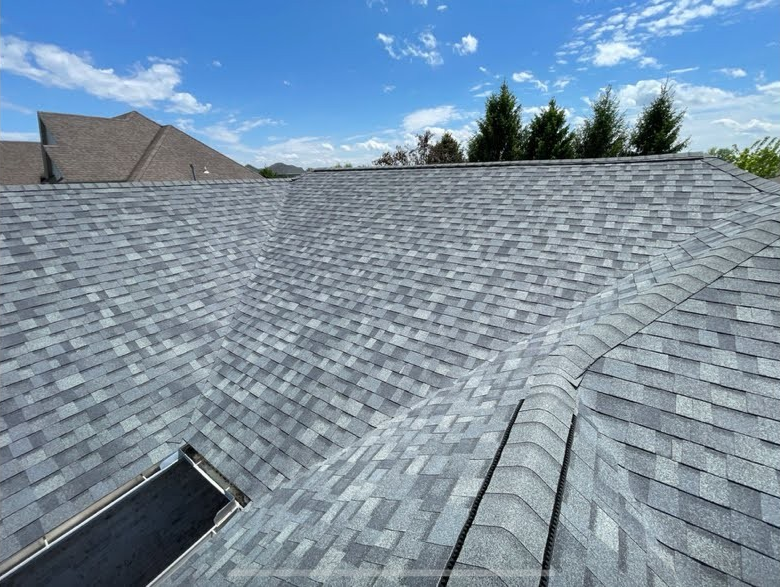
Even a good shingle cannot compensate for every installation error. Fastener placement, nail depth, shingle alignment, starter strips, flashing, valleys, underlayment, ice-barrier details, penetrations, and ventilation all contribute to the roof’s ability to shed water and resist wind.
Problems may appear as lifted shingles, exposed fasteners, recurring leaks near transitions, uneven courses, or premature blow-offs. Product-specific instructions and local requirements matter because the roof performs as a complete system, not as a layer of shingles alone.
Asphalt shingles are available in different constructions and performance levels. Wind resistance, impact resistance, sealant design, granule coverage, algae resistance, and compatible accessory components can vary. The best choice depends on the home, roof design, budget, and the written specifications for the product.
When comparing estimates, confirm that each contractor is proposing the same shingle line and system components. A lower price is not an equal comparison if the scope changes the underlayment, starter shingles, ridge caps, flashing, ventilation, or warranty options.
Balanced intake and exhaust ventilation helps move excess heat and moisture out of a vented attic. The Asphalt Roofing Manufacturers Association explains that proper ventilation can support asphalt shingle service life by reducing attic temperature and removing condensation.
Ventilation is not a one-vent cure. Intake, exhaust, insulation, air sealing, bathroom-fan routing, baffles, and the roof design need to work together. If upper rooms stay hot, the attic smells musty, nails are rusty, or sheathing looks stained, Top Roofing’s guide to a hot attic in Toledo explains what a full ventilation check should consider.
A simple roof with open slopes has fewer transitions than one with several valleys, dormers, skylights, chimneys, sidewalls, and low-slope sections. These details do not automatically mean a short roof life, but they create more places where water, snow, leaves, or ice can collect and where flashing must be installed correctly.
Uneven aging is common when one section drains and dries quickly while another stays shaded or collects debris. Trouble concentrated around a valley or penetration may be repairable, while repeated problems across several details can point to a broader system issue.
Sunlight and heat gradually age asphalt. Roof slopes with different orientations may weather at different rates, and darker or poorly ventilated assemblies can experience additional heat stress. Ohio’s seasonal temperature changes add expansion, contraction, and freeze-thaw exposure.
Recent NIST research on asphalt shingle durability identifies extreme heat, thermal cycling, ultraviolet radiation, freeze-thaw events, wind uplift, and hail impact among the exposures shingles can experience during service. That is why age should be considered together with the roof’s environment and condition.
A single severe storm can damage a roof that was performing normally the day before. Wind may lift, crease, loosen, or remove shingles. Hail can dent shingles, displace granules, or damage the mat, depending on the stone, impact, product, and condition of the roof.
Storm damage is not always obvious from the ground, and cosmetic marks are not the same as functional damage. After a significant storm, document what you can safely see and arrange an inspection. Do not climb onto a wet, steep, icy, or damaged roof.
Leaves, branches, clogged drainage, loose flashing, aging sealant, and overhanging limbs can create avoidable stress. Debris may hold moisture in valleys, blocked gutters can interfere with drainage at the eaves, and branches can scrape the surface or fall during a storm.
Routine care does not make an old roof new, but it can prevent small, repairable conditions from being ignored. Keep gutters and downspouts clear, trim branches back appropriately, remove roof debris safely, and address damage before repeated water entry affects the deck or interior.
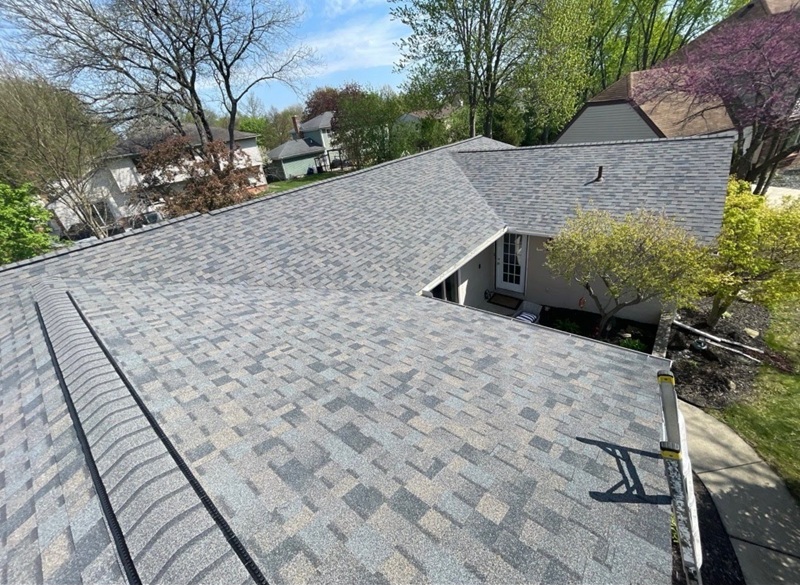
Some changes are cosmetic or isolated. Others show that the shingles or supporting roof system are losing the ability to perform reliably. Arrange an inspection if you notice:
One symptom does not automatically mean the entire roof must be replaced. The pattern, severity, cause, and condition of surrounding materials determine whether a focused repair remains practical.
Start with documents rather than appearance. Closing records, seller disclosures, a paid roofing invoice, warranty registration, insurance records, permit records, and previous inspection reports may identify the installation year and product. The prior owner, property manager, or contractor may also have useful records.
If you cannot find a date, a professional can often estimate a general age range by looking at the shingle style, wear pattern, flashing, repair history, and roof-system condition. That is still an estimate. Color and appearance alone cannot establish an exact installation date.
Once you identify the likely age, record it with the product and contractor information. That gives you a better baseline for maintenance, warranty questions, budgeting, and future inspections.
Repairs can preserve a roof that still has useful service life when the problem is isolated and the surrounding shingles remain sound. Replacing storm-damaged shingles, correcting a flashing defect, repairing a pipe boot, or addressing a limited leak can restore the affected area’s water-shedding function.
The Asphalt Roofing Manufacturers Association notes that asphalt shingle roofs are generally repairable, but temporary patches should not be mistaken for permanent repairs. A repair also does not reset the age of the rest of the roof.
Repair is less persuasive when shingles are brittle, matching material is unavailable, leaks are recurring in different areas, or deterioration is widespread. Top Roofing’s roof repair versus replacement guide compares the condition, scope, and cost factors that shape that decision.
Replacement often becomes the more practical long-term option when the roof is near its expected planning range and problems are no longer isolated. Common reasons include widespread curling or cracking, repeated leaks on multiple slopes, large areas of granule loss, extensive wind damage, soft decking, chronic ventilation issues, or a growing list of repairs with diminishing value.
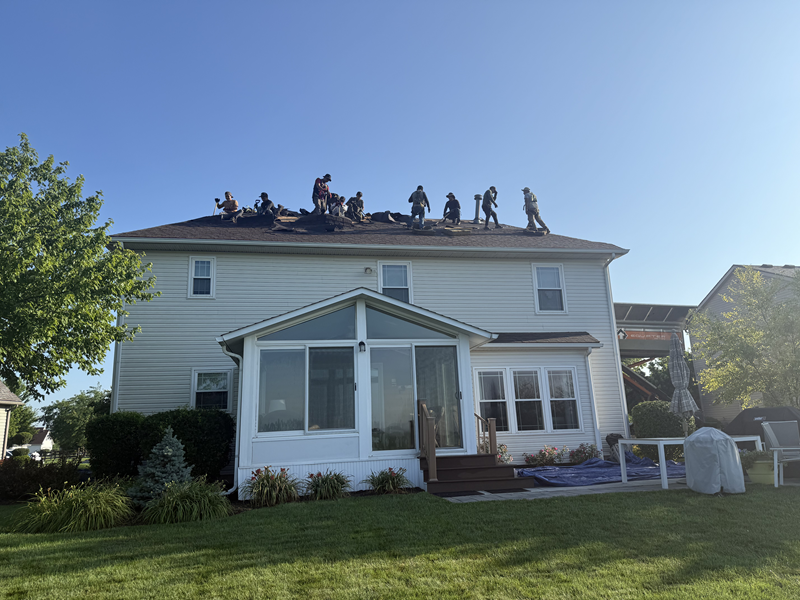
A full tear-off also lets the crew inspect the deck, address concealed damage, and rebuild the roof as a coordinated system. If replacement is recommended, use Top Roofing’s residential roof replacement service page to review the inspection, material-selection, installation, cleanup, and final-review process.
Budget and scheduling are part of the decision, too. The guide to new roof cost in Toledo explains the variables that affect an estimate. The roof replacement timeline covers what happens before, during, and after installation, while the guide to the best time to replace a roof in Toledo explains how condition, weather, and product requirements affect scheduling.
Do not delay an active leak, structural concern, or storm-damaged area just to reach a certain roof age or season. An inspection can define the condition now and give you a written basis for comparing repair and replacement.
About 15 to 30 years is a useful planning range, and roughly 20 years is commonly cited as an average. An individual Ohio roof may need work sooner or last longer depending on installation, materials, ventilation, roof design, weather exposure, and maintenance. Use age to plan an inspection, not to diagnose the roof by itself.
No. A product or warranty term is not a guaranteed service life. Actual performance depends on the complete roof system, installation, ventilation, maintenance, weather, and the written warranty terms. Review the current warranty for the exact shingle rather than relying on the number in its name.
Sometimes. A 20-year-old roof with one repairable flashing problem and otherwise sound shingles is different from a roof with widespread cracking, repeated leaks, brittle shingles, and soft decking. An inspection should evaluate the affected area and the roof as a whole before recommending repair or replacement.
It can. Balanced intake and exhaust ventilation helps remove excess attic heat and moisture, both of which can contribute to roof-system problems. Ventilation must be considered with insulation, air sealing, exhaust-fan routing, and roof design. Adding one exhaust vent without adequate intake may not correct the underlying issue.
Arrange an inspection when you see warning signs, after a significant wind or hail event, before buying or selling a home, or when the roof’s history is unknown. As the roof approaches its expected planning range, periodic professional evaluation can help identify changes before they become interior leaks. Avoid walking the roof yourself.
Not automatically. The answer depends on the type, severity, and distribution of damage, the roof’s age and condition, whether compatible repairs are possible, and any applicable policy or warranty terms. A roofing contractor can document visible conditions and provide a repair or replacement estimate. An insurer determines coverage and payment under the policy.
You do not need to guess how much useful life your roof has left. Top Roofing can inspect the shingles, flashing, penetrations, visible storm damage, ventilation, and accessible attic or deck conditions, then explain whether repair or replacement appears more practical.
Top Roofing, LLC is listed in Owens Corning’s contractor directory as an Owens Corning Roofing Platinum Preferred Contractor.
Is your asphalt shingle roof approaching the 15-to-30-year range?
Schedule a Toledo-area roof inspection and get a written repair or replacement estimate based on your home’s actual condition.