

If you’re seeing gutters overflowing in Toledo during a summer downpour, the problem may be more than a simple leaf clog. Water can spill over the front edge, run behind the gutter, wash mulch out of flower beds, stain siding, or collect beside the foundation.
The location and pattern of the overflow can help identify the cause. Incorrect pitch, sagging sections, restricted outlets, undersized downspouts, and damaged fascia can all keep rainwater from draining properly. Catching the problem early may help prevent damage to the roof edge, fascia, siding, landscaping, and areas around the foundation.
Gutters overflow when rainwater enters the system faster than it can move through the gutter and exit through the downspouts. A clog is one possible cause, but clean gutters can also overflow because of poor pitch, a low spot, an undersized outlet or downspout, or a problem at the fascia or roof edge.
Safety note: Watch the gutters from the ground during heavy rain. Don’t climb a ladder or walk on the roof while it’s raining. Photos or a short video taken from a safe location can help a gutter professional see how the water behaves during the storm.
Gutters shouldn’t be perfectly level. They need a slight, consistent slope so water can move toward the downspout.
When the pitch is too flat, water moves slowly and may remain after the rain stops. When it slopes in the wrong direction, water can collect near an end cap or in the middle of the run instead of reaching the outlet. A gutter pitched too aggressively can also send water toward one outlet faster than the downspout can handle it.
Signs of a pitch problem include:
A professional may be able to correct a limited pitch problem by resetting the hangers. If the entire system was installed with the wrong slope, more extensive adjustment or replacement may be needed.
Leaves are the most familiar gutter clog, but Toledo-area gutters may also collect maple seeds, small twigs, pine needles, roof granules, dirt, roof sediment, and bird or animal nesting material.
Sometimes the gutter trough looks fairly clean while the outlet or a downspout elbow is blocked. Water then backs up near the downspout and spills over the gutter edge.
Cleaning the gutter and flushing the downspout may solve an isolated clog. Homes surrounded by mature trees may also benefit from a professionally installed guard system. Our guide to gutter guards in Toledo explains the options and the maintenance they still require.
Gutter guards can reduce debris buildup, but they won’t correct bad pitch, sagging gutters, undersized downspouts, or damaged fascia. The underlying system should work correctly before guards are added.

A clean gutter can still overflow if the downspouts can’t move water away quickly enough. Large roof sections, steep slopes, and roof valleys can deliver substantial runoff to one gutter run. If that run has only one small downspout, water may collect faster than it can drain.
This often causes overflow near the outlet or at the center of a long gutter run, especially during a short, intense summer storm. Possible solutions include:
A professional gutter installation in Toledo should account for the roof area, roof shape, valleys, gutter length, outlet locations, and number of downspouts instead of simply copying an existing layout that doesn’t drain correctly.
The outlet is the opening where water leaves the horizontal gutter and enters the downspout. Even when the downspout is large enough, a small or restricted outlet can slow the entire system.
Problems can occur when the outlet is:
Inside corners and roof valleys deserve special attention because they can send concentrated runoff into a relatively small area. A splash guard may help contain the flow in some cases. In others, the outlet, downspout, or gutter layout needs to be changed.
If the gutter overflows directly above a downspout, check the outlet and downspout before assuming the horizontal gutter is too small.
Gutters can sag when hangers loosen, fasteners pull out, or the system repeatedly holds heavy debris and standing water. Even a small sag creates a low point where water collects instead of continuing toward the downspout.
Look for:
One or two failed hangers may be repairable. Multiple sagging sections can indicate a larger installation problem or deteriorated fascia behind the gutter. Simply driving another screw into weakened wood may provide only a temporary fix, so the fascia should be checked before the gutter is reattached.
Not every apparent gutter overflow starts inside the gutter. Water may run behind the system when the fascia is deteriorated, the gutter has pulled away, or roof-edge components aren’t directing runoff into the trough correctly.
Warning signs include:
Roof-edge leaks can also involve shingles, flashing, underlayment, or drip-edge details. If water appears behind the gutter or inside the home near an exterior wall, the issue may require more than gutter cleaning. Top Roofing’s roof repair services can help determine whether the water is coming from the gutter system, the roof edge, or a combination of both.
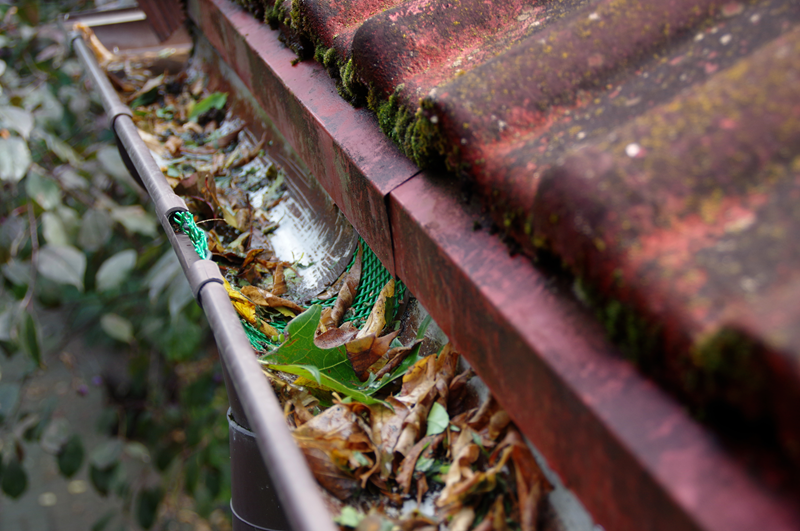
A hard rain is one of the best opportunities to see how the complete drainage system is working. Once the storm has passed and it’s safe to walk around the property, look for the following signs.
Dark streaks beneath a gutter often show where water has repeatedly spilled over or leaked behind the system. Bubbling paint, peeling finishes, or soft-looking wood may indicate that the problem has been happening for some time.
You may be able to see remaining water from an upstairs window or another safe location. Standing water suggests a low spot, incorrect pitch, or blocked outlet. Don’t lean out of a window or climb onto a wet ladder to inspect it.
Look for puddles close to the house, especially beneath downspouts. Water should discharge onto an area that directs it away from the foundation rather than letting it flow back toward the home.
For local context on how runoff from roofs and other hard surfaces enters the drainage system, review the City of Toledo’s stormwater guidance.
Pooling may be caused by a missing downspout extension, displaced splash block, poor grading, blocked underground drain, disconnected downspout, or overflow from the gutter above.
Rainwater repeatedly spilling from one point can create trenches in mulch, expose plant roots, and erode soil beneath the roofline. The location of the washed-out area often points directly to the overflowing section.
Mud spots or water marks can show where runoff is striking the ground and bouncing against the house. These patterns may indicate that the gutter is overflowing or that a downspout is releasing water too close to the wall.
Water dripping from the back of the gutter deserves prompt attention. It may indicate a gap between the gutter and fascia, deteriorated roof-edge materials, or damage hidden behind the gutter.
Take photos of stains, puddles, erosion, and loose sections. A video recorded safely from the ground during the rain can be especially helpful because the system may appear normal once everything has drained.
Overflow doesn’t automatically mean the entire system needs to be replaced. The right choice depends on the extent of the problem, the condition of the gutters, the drainage layout, and whether the fascia is still structurally sound.
A targeted repair should correct the reason for the failure, not just cover the visible symptom. Resealing an overflowing corner, for example, won’t help if the actual problem is a blocked outlet or sagging gutter run.
Replacing a failing system creates an opportunity to correct the pitch, improve downspout placement, increase drainage capacity, and address fascia damage before new gutters are attached.
Top Roofing installs custom-fit seamless gutters in Toledo with drainage layouts designed for the home’s roofline. Gutter guards can also be considered when debris is a recurring problem, but they should be installed only after the underlying pitch, outlet, and downspout issues are corrected.

Clean gutters may still overflow because of incorrect pitch, sagging sections, undersized downspouts, restricted outlets, poor downspout placement, or concentrated runoff from a roof valley. The location of the overflow can help identify the cause.
Yes. An unusually intense downpour can temporarily exceed a gutter system’s capacity. Frequent overflow during ordinary summer storms, however, often indicates a sizing, pitch, outlet, or downspout problem that should be inspected.
Gutter guards can reduce clogs caused by leaves, twigs, and seeds. They won’t fix gutters that are sagging, incorrectly pitched, too small, or connected to inadequate downspouts. The existing system should be evaluated before guards are installed.
Water behind the gutter may indicate that the gutter has pulled away from the fascia, the fascia has deteriorated, or the roof edge isn’t directing runoff into the gutter correctly. It may also involve drip edge, flashing, or shingle problems.
Overflow from the front of the gutter usually points to a gutter or downspout problem. Water appearing behind the gutter, along the soffit, or inside the home near an exterior wall may involve the fascia or roof edge. A combined roof and gutter inspection can identify the actual source.
Cost depends on the home’s linear footage, number of stories, roofline complexity, gutter size, number of downspouts, fascia condition, color selection, and whether gutter guards are included. An on-site estimate is the best way to determine the correct layout and project cost.
Not always. A damaged downspout can sometimes be replaced while the gutters remain in place. If the existing downspouts are too small, poorly positioned, or part of a system-wide drainage problem, replacing or redesigning both may provide a more reliable solution.
Overflowing gutters shouldn’t be ignored until water stains, rotten fascia, eroded landscaping, or foundation-area pooling become more serious.
Top Roofing LLC can inspect your gutter pitch, hangers, outlets, downspouts, fascia, and overall drainage layout. Whether your home needs a focused repair, larger downspouts, gutter guards, or a new seamless gutter system, you’ll receive a recommendation based on the actual cause of the overflow.
Top Roofing provides gutter services for homeowners in Toledo, Perrysburg, Sylvania, Maumee, Ottawa Hills, and surrounding Northwest Ohio communities.
Stop overflow before it causes more damage.
Schedule a gutter inspection and get a recommendation based on the way your system is actually draining.
Call (419) 262-2177 Request a Free Gutter Estimate