Late winter in Northwest Ohio is prime time for small roof issues to show up, then get worse fast once spring rains hit. Use this roof inspection checklist for Toledo homeowners to do safely from the ground and inside the attic to spot trouble early, schedule a winter roof inspection service, and handle repairs or early replacements before water finds a way in.
Quick Answer — What A Homeowner Can Safely Check (And What Not To Do)
You can safely do:
- Walk your property and inspect the roof from the ground with binoculars.
- Check gutters/downspouts, soffits, fascia, siding stains, and exterior vents.
- Look in the attic for staining, frost, damp insulation, or musty odors.
- Photograph anything suspicious for a roofer to review.
You should not do:
- Do not climb the roof in winter or during freeze–thaw conditions (black ice + brittle shingles + steep slopes = injury risk). For additional safety guidance, see NRCA’s consumer roof inspection and maintenance FAQs.
- Don’t chip ice off shingles, flashing, or gutters (you can damage the roof surface).
- Don’t spray salt or harsh de-icers on roofing materials.
- Don’t ignore a “small” stain—if you need immediate triage, read our Roof Leak: First 24 Hours guide.
If you see active dripping, a ceiling bubble, or wet insulation, skip the checklist and schedule a visit now (and consider a targeted Roof Repair inspection).
Exterior Signs From The Ground (Shingles, Flashing, Valleys, Vent Boots)
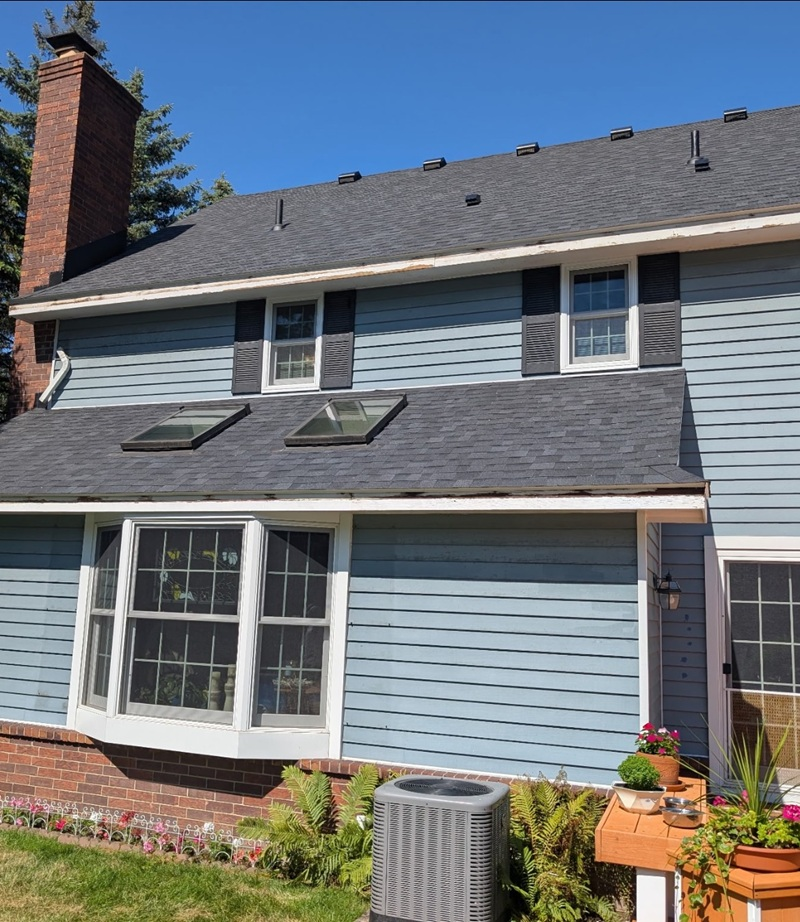
This is the core of a roof inspection checklist Toledo homeowners can do without leaving the ground.
Check Shingle Edges And Tabs
Look for:
- Missing shingles or exposed nail lines
- Lifted/curled tabs (wind + cold can loosen sealed edges)
- Cracked, split, or “bald” shingles (granule loss shows up as uneven color)
- Shingles that look wavy or sit unevenly (can indicate decking issues or trapped moisture)
Quick tip: If you see piles of granules at downspout outlets or on lower roof surfaces, that’s often a sign the roof surface is wearing faster than it should.
Scan Flashing Lines For Gaps Or Rust
From the ground, check:
- Chimney edges
- Wall-to-roof intersections (dormers, sidewalls)
- Any visible metal transitions
Red flags:
Rust streaks
- Separated seams
- Bent or lifted edges
- Dark staining that traces a straight line (water pathway)
Look Closely At Valleys
Valleys collect water, slush, and debris. Watch for:
- Debris buildup (leaves/branches)
- Dark lines or uneven patches
- Shingles that appear cut too close or “chewed” at the valley line
If your home has a history of ice buildup, see our Ice Dams 101
guide for what causes dams and why they often show up at valleys and eaves.
Inspect Vent Boots And Roof Penetrations
Plumbing vent boots are a classic late-winter leak point. From the ground, look for:
- Boot covers that appear cracked, torn, or sunken
- Any penetration that looks tilted, loose, or patched repeatedly
- Dark staining below penetrations (even if small)
Gutters & Downspouts After Freeze–Thaw (Overflow Stains, Pulled Fasteners)
Freeze–thaw cycles can shift gutters, loosen hangers, and create sneaky overflow patterns that soak fascia and cause rot.
Spot Overflow Stains And “Tiger Stripes”
Check:
- Streaking on fascia boards
- Discolored siding beneath the gutter runs
- Dark stains at corners and end caps
These often mean:
- A clog (ice + debris)
- Wrong pitch/sagging sections
- Ice is forcing water behind the gutter
Look For Pulled Fasteners And Sagging Runs
From the ground, scan for:
- Gutter sections that dip
- Hangers/fasteners visibly separated
- Gaps at seams
Sagging gutters can also feed ice dams by holding water where it can refreeze along the edge.
Confirm Downspouts Discharge Away From The Foundation
Make sure downspouts extend away and aren’t blocked by ice piles. Backed-up downspouts can force water to:
- Overflow at the eaves
- Run behind fascia
- Freeze and expand in seams
Attic Checks (Staining, Frost, Damp Insulation, Mold Smell)
If you’re comfortable entering your attic safely (with a stable ladder, good lighting, and staying on the framing), this part can reveal issues before they become a ceiling stain.
Look For Water Stains And Darkened Wood
Use a flashlight and check:
- Roof decking (underside of sheathing)
- Rafters/trusses
- Around chimneys, vents, skylights (if any)
Signs to note:
- Brown rings, dark streaks, or “washed” wood grain
- Shiny nail tips or wet-looking fasteners
Watch For Frost Or Condensation
Frost on nails or the underside of decking can indicate:
- Warm air leaking from the living space into the attic
- Poor ventilation balance
- Bathroom/kitchen fans dumping moist air into the attic
When it warms up, that frost can melt and mimic a roof leak.
Check Insulation For Dampness Or Compression
Damp insulation loses performance and can hide problems. Look for:
- Matted-down, clumped, or darker insulation patches
- Wet spots near eaves (common with ice dams)
- Any sign of animal nesting (can disturb ventilation paths)
Trust Your Nose: Moldy Or “Wet Wood” Smells
A musty odor may point to:
- Slow leaks
- Condensation issues
- Inadequate airflow
If you smell it but don’t see it, that’s still a reason to schedule a professional inspection—moisture can hide behind insulation or in soffit corners.
“Red Flag” Symptoms That Mean You Should Call A Roofer This Week
If you notice any of the following, it’s time to book a repair inspection now (before spring storms):
- Active dripping in attic or living spaces
- New ceiling stains, bubbling paint, or soft drywall
- Shingles missing or a visible patch of exposed underlayment
- Interior condensation that’s suddenly worse (possible ventilation/air leakage issue)
- Sagging roofline or noticeable dips (structural concern)
- Repeating ice dams or heavy icicles along eaves (often an insulation/ventilation/air-seal combo issue—see Ice Dams 101)
- Granules everywhere (gutters, downspouts, driveway) + brittle-looking shingles
- Any leak you had to triage recently—use Roof Leak – First 24 Hours and then schedule a pro to find the source
If multiple red flags appear, it may be time to discuss Roof Replacement options rather than pursuing repeated repairs.
What A Professional Inspection Includes (Photos, Moisture Checks, Ventilation Eval)
A thorough winter/late-winter inspection is more than a quick glance. A good roofer will typically provide:
Photo Documentation Of Problem Areas
- Close-ups of shingles, flashing, penetrations, valleys, and eaves
- “Before/after” photos if minor corrections are done on-site
- Clear notes so you can prioritize repairs
Moisture Checks And Leak Tracing
- Targeted moisture readings in suspicious attic areas
- Inspection of common leak pathways (chimneys, sidewalls, vents, valleys)
- Guidance on immediate mitigation if active moisture is found
Ventilation And Insulation Observations
Because many “roof leaks” in Toledo winters are actually condensation or ice-dam related, a pro may evaluate:
- Intake (soffit) and exhaust (ridge/roof vents) balance
- Blocked soffits from insulation
- Bath fan duct routing and termination
- Signs of warm-air leakage from living spaces
Repair vs. Replace Recommendations (With Timing)
The main goal before the spring thaw: stop water entry and prevent hidden rot. Your inspection should end with:
- A prioritized repair plan
- “Monitor” items (with what to watch for)
- If needed, a replacement plan that avoids emergency scheduling later
For most homeowners, booking a Roof Repair inspection in late winter is the cheapest way to avoid bigger spring damage.
FAQs
Do I Need An Inspection If I Don’t See A Leak?
Often, yes—especially after heavy ice, strong wind, or repeated freeze–thaw cycles. Many issues start as small flashing gaps, lifted tabs, or ventilation/condensation problems that don’t show inside until spring rains. A winter roof inspection visit can catch early failures while repairs are simpler.
Is It Safe To Climb A Roof In Winter?
Usually no. Cold shingles can be brittle, and shaded slopes can hold invisible ice. Ground checks + attic checks are the safest DIY approach. Leave roof walking and close-up work to pros with the right fall protection.
What’s The Difference Between An Ice Dam Problem And A Roof Leak?
Ice dams form when roof-edge temperatures stay cold while higher roof areas melt snow—meltwater refreezes at the eaves and can back up under shingles. A true roof leak is typically a failure point (flashing, penetration, damaged shingle).
Can A Small Ceiling Stain Wait Until Spring?
It’s risky. A small stain can mean ongoing moisture that’s soaking insulation and wood.
What Should I Do If My Gutters Are Full Of Ice?
Avoid chipping. Document the issue, check for overflow staining, and focus on safe ground-level observations. Ice buildup often points to drainage/ventilation/heat-loss patterns that should be evaluated during an inspection.
How Often Should Toledo Homeowners Get A Roof Inspected?
A common baseline is annually, after major wind/ice events, and anytime you see red flags. Homes with older shingles, complex rooflines, or past ice-dam issues benefit from more frequent inspections.
Schedule A Repair Inspection
Schedule A Repair Inspection to catch late-winter damage before the spring thaw, and rains turn a minor issue into major repairs.
Call: (419) 262-2177
Or Book Online: Contact Form
Prefer replacement guidance instead? Explore Roof Replacement options after your inspection.